Marine · Masts, booms & rigging
SY Zero.
From material science
to a complete rig.
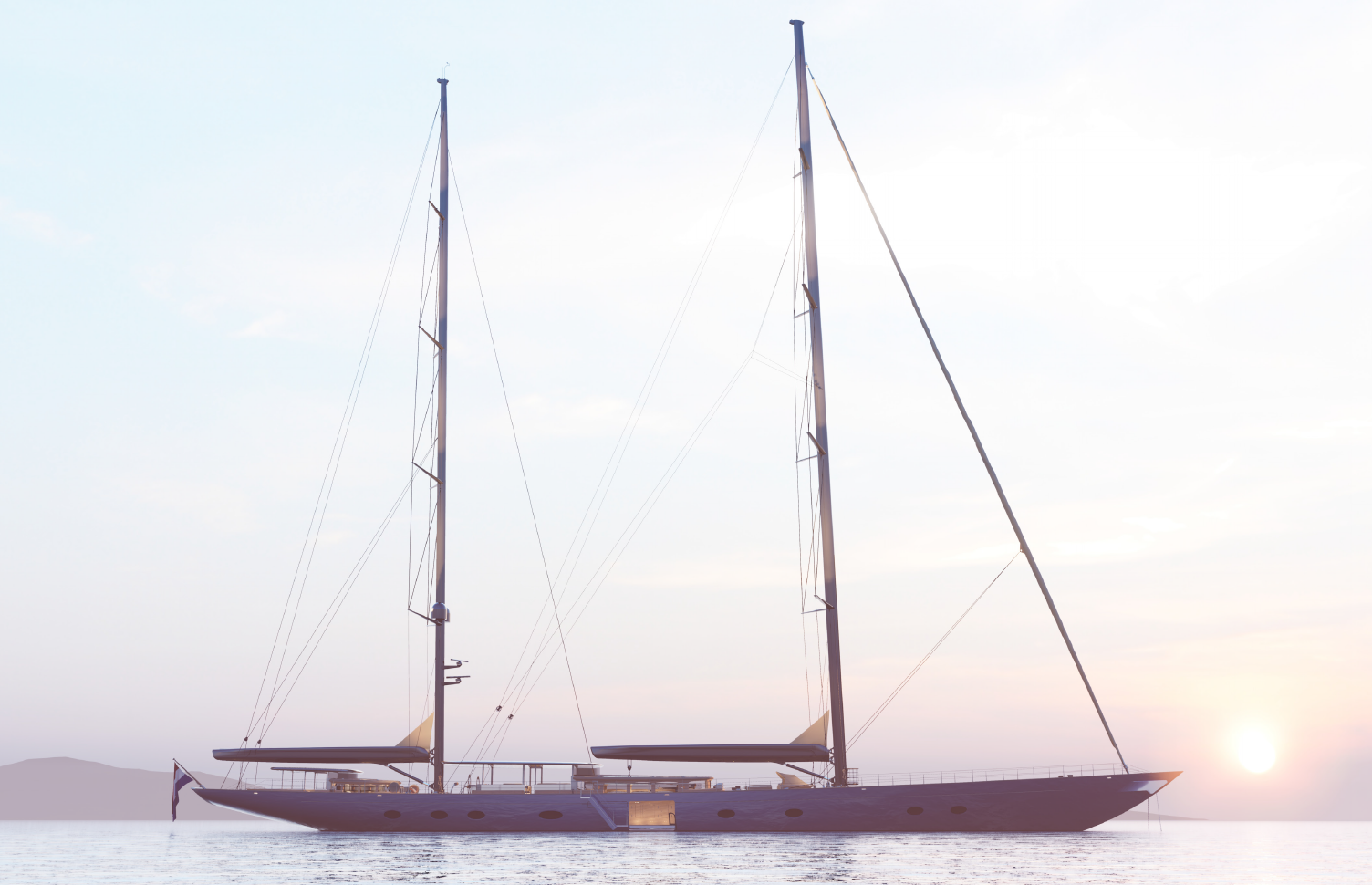
Carbon masts, booms, and standing rigging for SY Zero - a pioneering all-electric superyacht designed to operate entirely on renewable energy, without combustion engines. Combining classical elegance with innovative technology, she is both a sailing yacht and a development platform for more energy-efficient yachting.
Carbo-Link brings structural engineering, in-house prepreg production and composite manufacturing together to deliver the rig in collaboration with the yacht’s designers, builder, client and specialist partners. With Lloyd’s Register certifying the rig as the yacht’s primary propulsion system, the masts and rigging play a fundamental role in SY Zero’s approach to sailing and energy.
The project
A connected scope of supply.
Masts
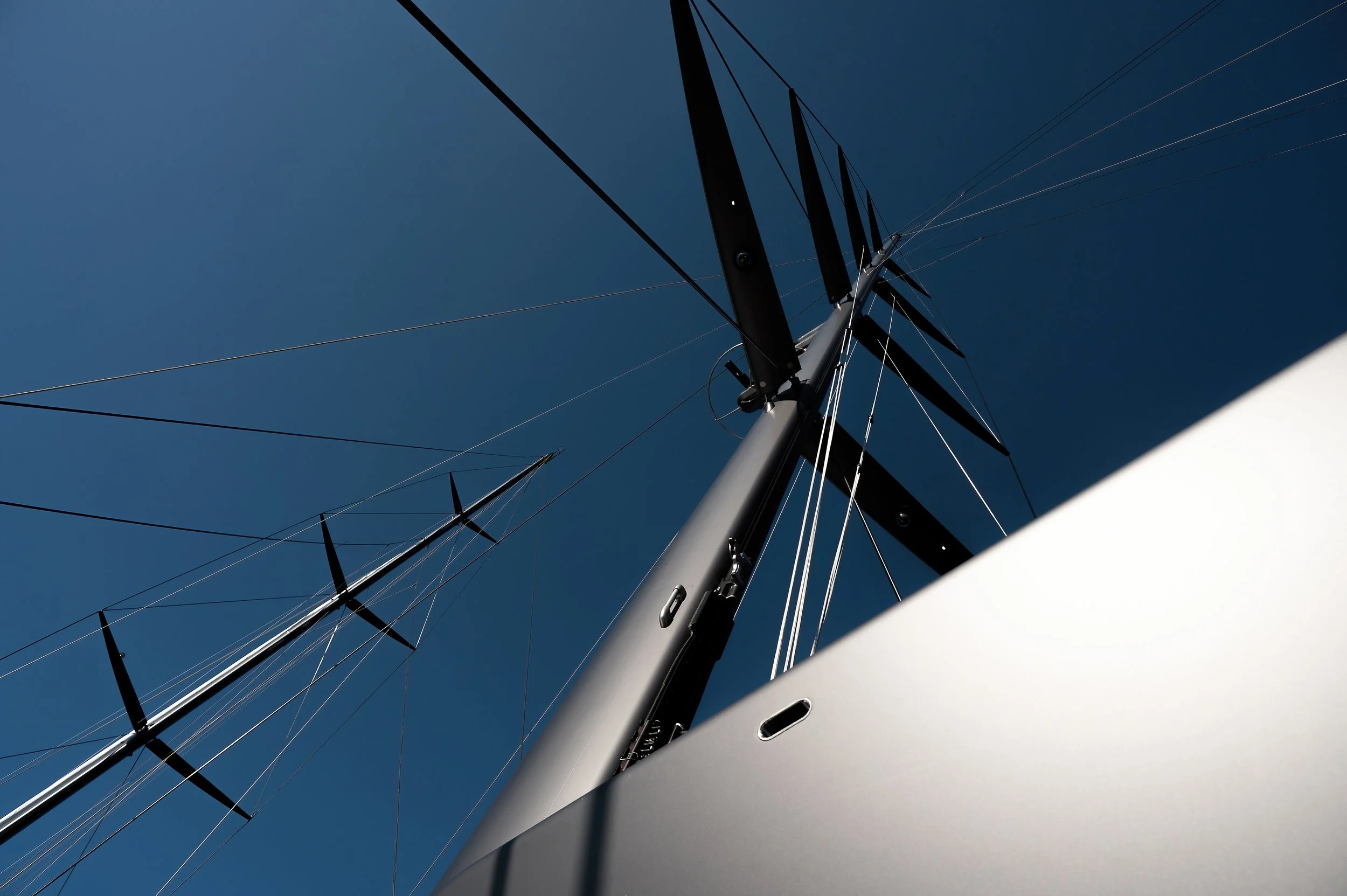
Two high-modulus carbon masts were built, cured, and assembled as a single piece, using internal stiffener systems to keep weight low while optimizing stiffness.
Booms
Two high-modulus slab-reefing booms featuring combined sliding outhaul and reef tracks, fully encapsulated sailing systems, and an internal water trap that feeds water onboard.
Spreaders
Lightweight, aerofoil-shaped, swept-back spreaders with adjustable internal inboard ends and an aerodynamic electrical layout.
Rigging
CL ELLIPSE rigging package, including internal tangs, CL TORQUE forestay and CL HYBRID ELLIPSE aft rigging.
A new chapter, built on experience
Our first mast project.
25 years of marine experience.
SY Zero is our first mast project. It builds on 25 years of producing complex carbon components for the marine industry, especially standing rigging.
Having worked with owners, captains, shipyards, naval architects, and rigging specialists, we had already developed a practical understanding of marine interfaces, project processes, and operating requirements.
For Zero, that industry knowledge was combined with materials science, in-house prepreg production and engineering experience across demanding composite applications.
Marine knowledge
Experience with complex rigging, structural components, and the teams responsible for their integration and use.
Cross-sector engineering
Knowledge from aerospace structures and composite female tooling helped inform the approach to spar development.
Connected capabilities
Materials, engineering, tooling and manufacture brought into a coordinated project scope through vertical integration and control of the full value chain.
Concept
Engineering
Materials
Assembly & Stepping
Sea Trials
01 Concept discussions
Start with what the yacht
needs to achieve.
The project began with discussions about the yacht's objectives, rig requirements, and the wider project team's responsibilities.
This stage connected the intended sailing and operating profile with structural requirements, system integration, and a practical route from manufacture to sailing.
02 Design & engineering
Connect the global rig
to the local detail.
Structural engineering, finite-element analysis, and 3D modeling link the rig's overall behavior to the laminate, local reinforcements, and component interfaces.
The design process considers how the masts, booms, rigging and yacht interact, while developing geometry that can be manufactured, assembled and integrated.
Overall rig behaviour and agreed load cases
Structural and laminate development
Detailed analysis of critical regions and interfaces
3D co-ordination of fittings, hardware and systems
Engineering reviews with the project team
03 Material science
Control the material
before it becomes a structure.
We engineer and produce our own prepreg, connecting material preparation with structural design and manufacturing requirements.
Fiber, resin, and processing choices are part of the development route, along with the material properties and manufacturing controls needed for the component.
Material specification
xxx
Certification & qualification
xx
From aerospace to the open ocean
xx
04 Manufacturing
Engineer the tooling.
Control the build.
Custom composite tooling
Tooling developed around component geometry, process requirements and dimensional control.
Layup, automation & cure
Material placement and cure processes organised around the structural and production requirements.
Machining & inspection
Machining and inspection connect the cured structure with the required fittings and assembly interfaces.
Quality built into the process.
Our AS9100D-certified quality-management framework supports controlled processes, traceability, and continuous improvement. We define project inspection, testing, and acceptance requirements for the supplied scope alongside the certfication body, Lloyds in this case, and the project team.
Project outcomes*
The practical lesson: assess the hanger system together with the arch, deck and construction sequence to understand the opportunity for the complete bridge.
≈500 t
Steel saved
≈1,350 t
Reinforced concrete saved
Only 4 days
Hanger installation
*Material savings reported by Empa for this bridge relative to the conventional steel-hanger solution. Installation duration reported by sbp. These are project-specific outcomes.
Recognition
Recognised for innovation,
engineering, and design.
-
Projects above £10 million · Bridge design & engineering
-
Road and railway bridges category
-
-
Institution of Structural Engineers
-
Technical summary
The project in detail.
Bridge
Location: Küstrin-Kietz, Germany – Kostrzyn, Poland
Opened: July 2024
Total superstructure length: 266 m
Main arch span: 130 m
Superstructure width: 13 m
Arch rise: 16 m
Rail tracks: 2
Design speed: Up to 120 km/h
Future electrification: Provision included
Dimensions follow sbp's published project data.
Carbon hangers
System: Carbo-Link CL SOLID CFRP hangers (CL-BRIDGE)
Quantity: 88
Diameter: 50 mm
Length range: 2.4 – 18.4 m
Axial rigidity EA: 300 MN
Working load: 1,960 kN
Breaking load: 3,600 kN
Dimensions follow Carbo-Link’s published project data.
Project team
Carbo-Link AG Carbon hanger manufacturer.
DB InfraGO AG Client / railway infrastructure owner.
Knight Architects Architecture and architectural concept development.
Schüßler-Plan General planning, alignment, foundations and substructures.
schlaich bergermann partner (sbp) Alternative superstructure design - carbon hanger network.
Empa Experimental fatigue testing and technical evaluation.
Sächsische Bau Principal contractor.
What could carbon hangers
change in your bridge?
Share your bridge type, span, loading requirements, design stage and programme.
We will review the hanger requirements and interfaces with your engineering team to assess a suitable scope.
Prefer email? info(at)carbo-link.com
Or to call? +41 58 201 25 00